Dave Marsh

Dave Marsh passed away in August. From the 1970s onward, he was one of the best-known music writers in the US. I’ve experienced two major bereavements in the past year, and that’s made me much more aware of how important it is to honour those who have passed, by speaking their names and telling their stories. I could write a very long piece about Dave’s influence on the profession of music writing, but instead I want to tell the story of a small kindness he extended to me that had a big impact.

I first got to know Dave’s music writing through Creem magazine, which in its heyday was one of my very favourite music magazines. Reading it was informative,  and it was fun. The writers knew their stuff, and they absolutely refused to take anything seriously. For example, one of the recurring features in Creem was the “Object from Space” photos. When the American Music Awards were launched, Creem dubbed the trophy the “Object from Space” – which indeed was what it looked like – and regularly ran photos of celebrities holding the trophy, with snarky captions about it and them. The Creem writers were experts at popping the ego bubbles of musicians that took themselves a little too seriously, and doing it entertainingly. I’m sure that they got many angry phone calls from publicists, record labels, and managers – and probably from musicians too – but they carried on regardless.

I loved Creem so much that whenever a new issue arrived, I would take it with me to my classes at Simon Fraser University. When I started as an undergraduate student at SFU, I took several courses that were held in huge auditorium-style lecture halls, with several hundred students in each class. When I went to classes in those huge halls, I would climb the stairs and get a seat in one of the furthest back rows, open my notebook, and then open Creem and read it, instead of following what was being written on the whiteboard down front.

I wish I could say that my fondest memory of my introductory statistics course is learning about statistics, but it’s actually of reading something in Creem that so incensed me that during the class I wrote a letter to the editor, by hand, on three-hole lined looseleaf paper. Right after class ended, I stuffed the sheet of paper in an envelope and mailed it – and they ran the letter in the next issue! (And I passed the course. Barely.)

Around 1980, Dave was becoming annoyed at the state of music journalism – the decreasing number of outlets for music writers’ work, and the increasing amount of uncritical coverage in the established outlets. He felt there was a place for an independent publication that covered industry events and reviewed albums, but that also looked at deeper issues that the mainstream music press was ignoring – for example, artists that presented themselves as socially conscious while accepting tour sponsorships from companies whose products were made in sweatshops.  So he launched a monthly newsletter, Rock & Roll Confidential (RRC). It had very reasonable subscription rates, even for international subscribers, and I signed up.

Dave Marsh and the books he wrote. The book I mention in this post is third from the bottom in the right-hand pile. (credit: official Dion page/Facebook)

I’m going to contextualize the next part of the story by explaining where I was at this time in my life. I had quit my newspaper job as a music writer because as I describe here it was a very dysfunctional workplace, and I felt more and more that my expertise on the topics I was writing about wasn’t being respected (which was also happening to other writers in the same department). After I quit, I tried freelancing for a while. I wasn’t particularly entrepreneurial, but I did all the things freelancers were supposed to do, and only got rejection after rejection. I posted all the rejection slips and letters I received on a wall in my apartment, and I came very close to filling the wall.

The few freelance gigs I did get were with a short-lived regional music newspaper and with a very well-regarded national music publication. The regional newspaper went out of business after a few issues, but at least it paid me. The national publication ran two of my articles and then started avoiding me when I asked for the payment that I had been promised. I filed a case against them in small claims court, after which they coughed up the money they owed me and told me to never contact them again. (That publication also went out of business a few years later.)

I was frustrated. I knew that music writing was important to its readers, but there didn’t seem to be anywhere for me to do it. So RRC was something of a lifeline. It helped me feel connected to the industry, even though by now I was at best an interested bystander, and it gave me hope that there was at least one place for smart, insightful music writing.

In mid-1983, RRC ran a couple of articles speculating about ways to support new artists and what we would now call marginalized artists – not just “you’re great, keep at it” but more formal structures that would get their music noticed. This topic intrigued me, because I was very familiar with the Cancon system that requires Canadian broadcasters to give specific amounts of airtime to Canadian music. I had long ago stopped looking for freelance music writing opportunities, but I thought, they probably don’t even know about Cancon and it’s a great example of what they’re suggesting. So I wrote a letter to Dave explaining who I was and what I could write about, if he was interested.

I fully expected to never hear back, but just over a week later I got a reply in the mail from Dave. Yes, he was interested, and while he couldn’t pay me, he’d be happy to see the article. I was absolutely shocked but also thrilled. And after my previous freelancing experiences, I appreciated that he was honest about this being unpaid work. Maybe he was paying other contributors, but if he was I didn’t really care. I blew off my university homework for a week or so, and put the article together. It was a good writing exercise because not only did I have to explain Cancon in a way that non-Canadians would understand, but I also had to explain why it was created and why it was culturally important.

I finished the article and mailed it, and it appeared in RRC’s February 1994 issue. In the grand hierarchy of well-known music writers I wasn’t even on the ladder, so to see my name alongside the names of writers like J.D. Considine, Chuck Eddy, and Greil Marcus  – some of the people whose work I used to read while sitting at the back of SFU lecture halls – was surreal.

But then it got better. A few months later, I got another letter from Dave. He was working on an anthology of RRC articles that was going to be published in a book by a major US publishing house. Would I give permission for my article to be included? Would I! I should point out here that Dave didn’t actually have to ask, because I assigned the copyright of the article to RRC before the article was published. But he asked nonetheless, which I think says a lot about how respectful he was of other writers’ work, and I signed the release and sent it back.

The article appeared in the book, and again I was thrilled and again it felt surreal. By now I was close to finishing my undergraduate degree and was getting ready to apply to master’s degree programs (mostly because I didn’t want to go out and get a real job). I knew that having publications was important in academia, so I added the RRC article and the book to my resume. Now you may say, quite rightly, what does publishing a popular press article about music have to do with getting into a graduate-level business program? The obvious answer is, not much – but surprisingly, it helped. Some of the programs I spoke to were intrigued by my past career, because it was interesting work and because I seemed to be making a very big change from it. But having those publications demonstrated that I could write for specific audiences and get published by “names” in that field. So that experience was important, even if the topic wasn’t directly relevant.

The index for the section of The First Rock & Roll Confidential Report that included my article. When the book was released, I was taking a course that assigned some of Simon Frith’s work as required readings. So to have my name alongside his in a book index was absolutely wild. (credit: own photo)

Later on, I also included those publications on my Ph.D. program applications, and they had the same effect. They also turned out to be very useful in helping me decide where to enrol. If a representative of a program raised their eyebrows and said “and what is this?”, I knew that the program wasn’t going to be supportive of work that didn’t conform to their norms, and I wouldn’t be happy there.

But there was a larger and longer-lasting effect of those two publications. They gave me back my confidence in my writing. Leaving my newspaper job was upsetting for many reasons, and one was that I felt I was being forced out of doing something I liked and was good at. It took me a long time to come to terms with that. I chose to leave, but it didn’t feel like a deliberate choice; it was just the most feasible option in an untenable situation. I was resentful and bitter, and that kind of seeped into how I felt about music writing – especially after the rejections and bad business dealings I encountered when I tried to continue.

Having my article published in RRC and then having it anthologized in a book was huge for me. It showed me that I could play in the major leagues, so to speak, and that my work was good. I was nobody in the music writing world at that point, but Dave didn’t care, and he let me go ahead and do my thing. It was decades later when I returned to being a music writer, and that also started with a situation of “hmm, I could do that, I’ll write to them”.  I don’t think I would have had the guts to send the message that resulted in me becoming a music writer again, if I hadn’t had that positive experience with Dave and RRC.

RRC evolved into Rock and Rap Confidential, which still has a page on Facebook. Dave’s professional reputation took something of a beating in later years, because some of his writing was dismissed as overly positive cheerleading rather than even-handed assessment. He also got flack for writing about Bruce Springsteen as a supposedly neutral observer when his wife was part of Bruce’s management team – a connection that he never denied or tried to conceal. If I remember correctly, his response to that particular criticism was along the lines of “a visible conflict of interest is better than a hidden one”. I’m not sure that any conflict of interest is appropriate, but his response was typical of how he approached things. He said what he wanted to say, regardless of how others might feel about it, and sometimes he said things that no one else was brave enough to say and that needed to be said.

The kindness that Dave extended to me was a very small part of his overall legacy, but it made a very big difference to me and my work. I will always be grateful for that. I send my sincere condolences to Dave’s family and friends, and to all that loved him.


Jill

This past Thursday was the first full day off I’d had for a couple of weeks. I was sitting in a coffee shop, drinking a latte and doing a word puzzle, and decided to look at my email on my phone. Just as I opened my email account, a message came in, with a subject line so shocking I thought at first I had misread it. “Jill died in a house fire.”

“Jill” is Jill Sobule, who I took songwriting classes with during the pandemic. The email was from a friend in my online songwriting group – a group that grew out of Jill’s classes. The heartfelt tributes from Jill’s friends and colleagues describe what I saw in those classes. She was generous, kind, incredibly talented, and funny. I’m so grateful that I got to learn from her.

In the 1990s, I knew Jill from her hit singles:  “I Kissed A Girl” from her second album, and “Supermodel” from the soundtrack of the movie Clueless. (“Two-hit wonder”, she always pointed out whenever someone called her a “one-hit wonder”.)  I started following her on Twitter around 2018 or so, because her Tweets were hilarious. Then in April 2021, when we were all stuck at home during the pandemic, Jill announced on Twitter that she would be doing a series of online songwriting classes. I thought about it, and got up the courage to DM her. I asked whether absolute beginners could participate, and she replied, “Sure!”

I’ve taken music lessons and can read music, but other than singing in choirs at school I’ve never been a performing musician. And as much as I like music, I had never felt the impulse to write songs. Obviously I like to write prose, and I can make up little melodies to entertain myself, but I had no idea how anyone went about connecting those two things. I had concluded that other people had the songwriting gene, but I did not.
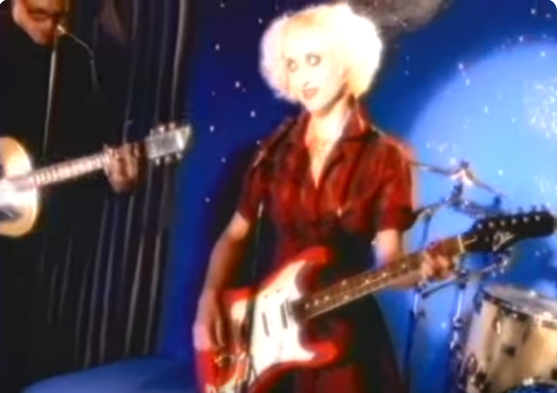
Jill in the video for “Supermodel”. (photo credit: YouTube)

But when I saw Jill’s offer, I thought, well, she writes great songs, and if I write about music I should probably learn something about how songwriting works. So, with some degree of apprehension, I signed up for the four class sessions.

At the start of the very first class, Continue reading

Led Zeppelin’s Lunchtime Concert

I recently saw the documentary Becoming Led Zeppelin. Throughout it there were montages of ticket stubs, concert posters, and the like, to illustrate how much the band toured – and every time I glimpsed something that mentioned “Vancouver” it made me laugh. Not because I saw any of those shows – although I think half of my high school was at one or both of the Led Zeppelin shows here in 1975 – but because I was half-hoping there would be a mention of one of Vancouver’s greatest urban legends: Led Zeppelin’s lunchtime concert.

This is the story. Led Zeppelin were booked to play here in spring 1970. Allegedly, upon arriving in this fair city, they decided that Continue reading

Fountains of Wayne Book Now Available

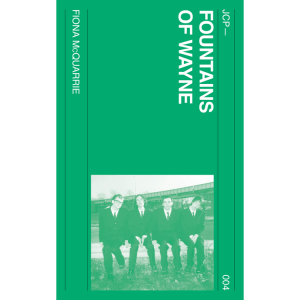
My new book Fountains of Wayne is now officially on sale.

The band announced two live shows this summer – their first in more than a decade – just before the book went to the printer! Thankfully, there was enough time to stop the production process, and to revise the manuscript to include this very unexpected but wonderful news.

Links to purchase Fountains of Wayne are here, for both print and eBook formats.  I hope you enjoy reading it.

Happy Holidays 2024

2024 was a very good year in music, for me. I saw some excellent shows, I listened to some excellent albums and singles, and I got to write about some excellent musical artists. I really can’t complain.

I’ll be taking a few weeks off during the end of 2024 and the start of 2025. Thank you to everyone who’s visited Writing on Music this year, and who’s read, commented or shared posts from this blog. It’s very much appreciated. My best wishes to you for a restful holiday season, and for a happy and prosperous 2025.

Ambient

A few months ago, I had never heard of William Basinski, and had never heard any of his music. But lately I’ve been getting into ambient music, because I like listening to it at work – it’s calming but it also helps me be productive. I wanted to explore the genre beyond its best known artists, i.e. Brian Eno and his collaborators, so I looked online for recommendations of other ambient albums. A Reddit thread on the topic of “best ambient album ever” had more than a few mentions of Basinski’s Disintegration Loops albums, so I found those on YouTube and started playing them.

The Disintegration Loops are astounding. The title is literal; Basinski took old analog tapes that he recorded decades ago, looped them into a reel-to-reel tape machine, and played them until the tapes physically fell apart. It sounds bizarre, but it’s fascinating to listen to, as the sounds on the loops gradually devolve and deconstruct.

Since this is not exactly mainstream commercial music, imagine my surprise when this year’s Vancouver International Film Festival program was released, and one of the scheduled events was a live performance by Basinski. From not even being aware of him to suddenly encountering his work and being enraptured by it, and now he was coming to play live in my city? I know when the universe is trying to tell me something. So I bought a ticket, and went to the show this week.

Being something of a newbie to this whole ambient scene, I had no idea whether there would be lots of people at the show, or embarrassingly few (which has happened at a few VIFF events I’ve attended). When I got to the theatre, Continue reading

“Before The Dawn”, 10 Years Later

Monday, August 26, marks the 10th anniversary of the starting date of Before The Dawn, the 22 live shows by Kate Bush that were her first concert performances since 1979.

As I wrote in this blog post, when I got the completely unexpected notification about these shows, I knew I had to go – and I did. I saw three of the shows, and even now, 10 years later, they are still among the best live performances I’ve ever seen. Not just for the quality of the music, but for the incredible staging, theatricality, and attention to detail.

In 2016, Kate released a live album of the show’s music. At least three of the shows were filmed, according to people who had their seats at the shows moved to accommodate the equipment. Supposedly the filming was for a DVD, but Continue reading